Phat Cat P90 Pickups
Compare
Bare Knuckle Blue Note 90 vs Seymour Duncan Phat Cat (SPH90-1)
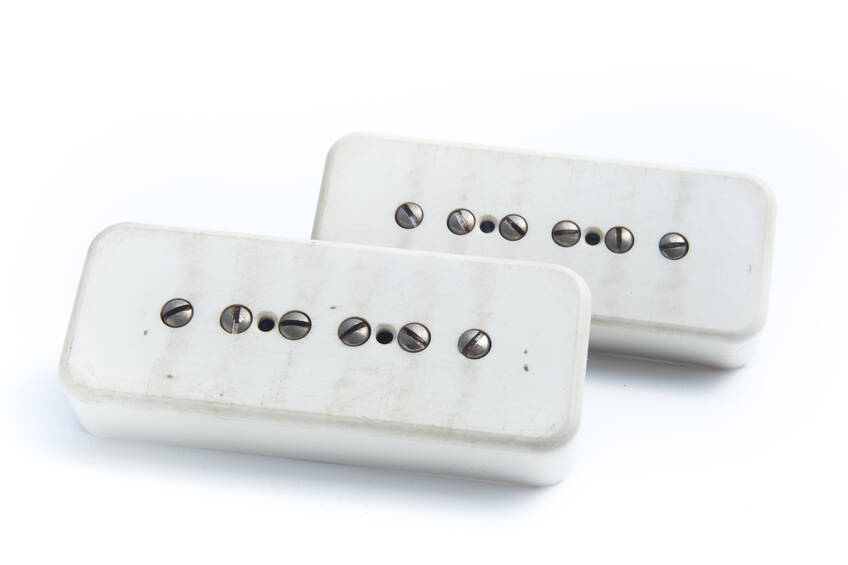
Bare Knuckle Blue Note 90
bridge P-90 soapbar
78 match
medium confidence

Seymour Duncan Phat Cat (SPH90-1)
bridge P-90 soapbar
Compared with the Bare Knuckle Blue Note 90, the Seymour Duncan Phat Cat (SPH90-1) has hotter output, a brighter top end and more midrange.
Specs side by side
differs marks specs where they part ways| Spec | Bare Knuckle Blue Note 90 | Seymour Duncan Phat Cat (SPH90-1) |
|---|---|---|
| DC resistancediffers | 7.5k | 8.49k |
| Inductance | not measured | not measured |
| Magnet | Alnico 2 | Alnico 2 |
| Coil | Single coil | Single coil |
| Resonant peakdiffers | — | 6.05 kHz (Seymour Duncan's own test load) |
| Bass (tone chart)differsEach maker grades its own chart, so read these within a brand | 5 / 10 | 6 / 10 |
| Mids (tone chart)differsEach maker grades its own chart, so read these within a brand | 4 / 10 | 5 / 10 |
| Treble (tone chart)differsEach maker grades its own chart, so read these within a brand | 6 / 10 | 7 / 10 |
| Slot | bridge P-90 soapbar | bridge P-90 soapbar |
| Traits | vintage output, dark, scooped mids, soft & warm | vintage output, soft & warm |
How close on each spec
100 means identical on that spec. The score weighs these, and counts anything we couldn't compare as a typical difference. How scoring works
Output
82
DC resistance (no inductance for one of them)
Magnet
100
both Alnico 2
Coil
100
same coil type
Brightness
59
each against its maker's average
Mids
46
each against its maker's average
Bass
70
each against its maker's average
Videos
Bare Knuckle Blue Note 90
No videos of its own collected yet.
Seymour Duncan Phat Cat (SPH90-1)
Seymour Duncan Phat Cat P-90's
What players and reviewers say
On the Seymour Duncan Phat Cat (SPH90-1)
“I am loving the Phat Cat in the neck of my warmoth tele (semi-hollow mahogany body, ebony LP scale neck), and I'm looking for a bridge pickup thats just as fat sounding.”
“Too me, the Phat Cat has more mids than the jazz, and its covers more frequency from lows to highs.”